


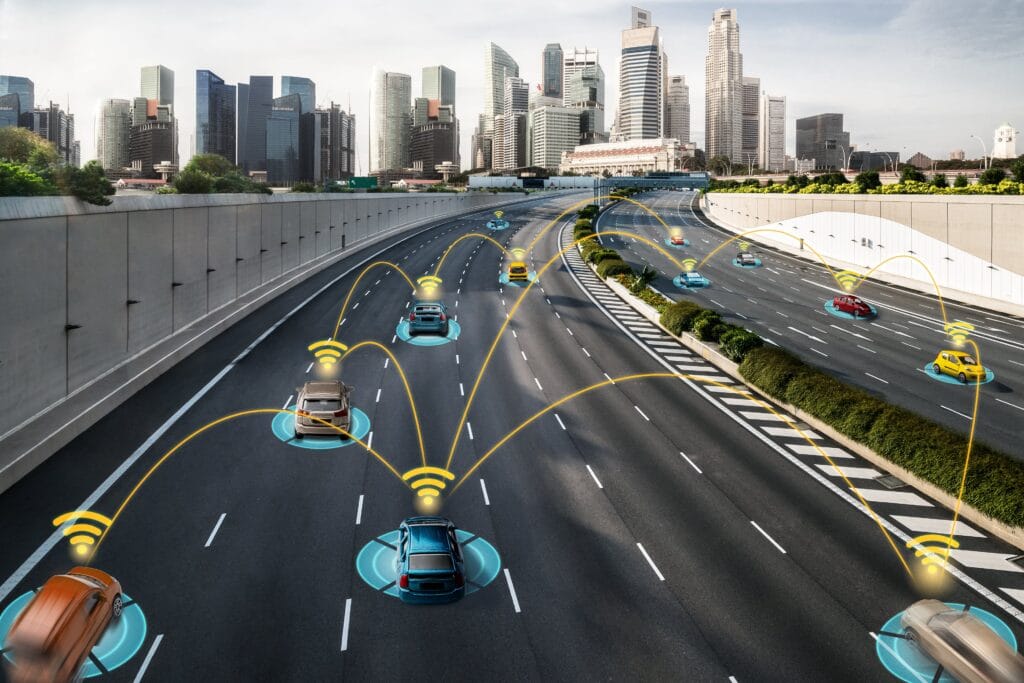
There’s no doubt that cars are becoming increasingly automated. And as technology advances, it’s only going to become more and more common for cars to have features like automatic braking and lane keeping assistance. But what about the future? What happens when cars can not only detect obstacles and other vehicles on the road, but also communicate with them? That’s where V2X comes in. Vehicle-to-vehicle (V2V) and vehicle-to-infrastructure (V2I) communication is a new technology that allows cars to share information with each other and with the surrounding environment. This could mean a lot of different things for the automotive industry, but one of the most exciting applications of V2X is in advanced driver assistance systems (ADAS).
What is V2X?
V2X stands for Vehicle-to-Everything. It is a subcategory of car ADAS. V2X is an exciting upcoming technology that will allow our modern cars to communicate with other cars, public infrastructure, pedestrians, and even the global network! What makes V2X unique is that unlike a traditional GPS or radar sensors, V2X will communicate with the technology around it – kind of like a Bluetooth device. This allows split-second data transfers which in turn allows extremely fast response times.
Imagine a world where a self-driving vehicle knows ahead of time that a pedestrian will be crossing soon, rather than relying on a camera sensor to hopefully sense a pedestrian. Sounds amazing right? That’s because it is, and we’re confident that this system will change the world once it becomes more commonplace.
Within the realm of V2X, there are systems such as V2V, V2I, V2P, and V2N. Let’s cover each of the subcategories of this technology and how they work.
V2V
V2V stands for Vehicle to Vehicle. With V2V technology, your car can transmit data to other cars around your vicinity. With a full combination of V2V, radar, camera sensors, and GPS, your car will be able to assess risks of traffic incidents and help you avoid them. It truly is the technology for a car of the future. V2V could also potentially be used to allow cars an instant take-off and instant stopping at traffic lights or signals. This would increase traffic efficiency ten-fold and reduce the amount of congestion on the roads.
V2I
V2I stands for Vehicle to Infrastructure. With this form of V2X technology, your car will be able to communicate with devices on or around the roads. The possibilities are endless with this level of interactivity.
Imagine a road system where your car knows several minutes ahead of time where there is an accident, construction, potholes, or any emergency signals. We can take it even further than that – imagine a parking lot or parking garage that can automatically tell your car where there is an open space and perhaps even guide you to that spot! Wouldn’t that be handy? Parking assistance is an ADAS which is currently in development and could very well be part of our daily lives in then near future!
V2P
V2P stands for Vehicle to Pedestrian and is perhaps the most complicated system to implement. With V2P, we could create a system where cars can notify pedestrians if there is an issue with the brakes – signaling for pedestrians to wait for a safe moment to cross. We could also communicate where pedestrians are congregating when it comes to public transportation, where a pedestrian will be crossing so that vehicles know when to yield for crossing pedestrians and when it is safe to go. The main issue with implementing this system is that pedestrians would have to be willing to use their mobile device as a public signal or safety alert beacon, but the benefits would far outweigh any potential downsides.
V2N
V2N stands for Vehicle to Network. It is very similar to the other forms of V2X technology, but it will be far more comprehensive in its connections. The other forms of V2X would act more as a Bluetooth connection – a momentary transfer of data based on location. Now imagine your car being connected to a whole database with other cars, infrastructure, and pedestrians all at once. Just as social media works seamlessly together to create an excellent user experience, V2N could create entirely safe environments by allowing every system to work together.
How will V2X impact the development of future ADAS technology?
What is V2X communication going to offer to the future of ADAS technology? Why is V2X such an important topic for the future of traffic safety?
V2X technology will open many doors in the future that involve public safety and infrastructure. With the ability to quickly transmit and receive data from nearby vehicles and pedestrians, traffic incidents will be a thing of the past. In order to truly appreciate the capabilities of V2X in ADAS, one must consider it as an add-on to current driver assistance technologies such as self-driving, camera sensors, lane change assist, adaptive cruise control, pedestrian sensors, and GPS + radar.
Learn more about the types of ADAS sensors here.
What challenges still need to be overcome before V2X can be widely adopted in the automotive industry?
V2X technology is still very far from becoming a normal, everyday topic. We won’t be seeing V2X widely implemented on the streets any time soon. The first issue to overcome is how to implement it widely and efficiently into our current infrastructure. This would take an immense amount of time and money.
The next issue would be installing vehicle to vehicle communication in every automobile including busses, semi-trucks, motorcycles, and every other motor vehicle – for every single vehicle! That’s a lot of vehicles to install technology into, and someone has to pay for it.
The last two obstacles to overcome would be the topic of privacy and legislation. With a negative public opinion of new and upcoming technologies, it would be difficult to garner trust with the entire public about the benefits of the V2X technology.
We would also have to find a way to have US and global legislatures accept V2X as a common spread technology. It gets even more complicated with the US – remember, the US is comprised of 50 individual governments and legislatures. They all have vastly different traffic laws, regulations, and infrastructures. The biggest challenge would be finding a way to incorporate all the technologies across every state and making everything compatible despite the drastically different infrastructures.
A Future with Car ADAS and V2X
While there are still some challenges that need to be overcome before V2X can be widely adopted in the automotive industry, the benefits are clear. With its ability to provide real-time communication between vehicles and infrastructure, V2X has the potential to revolutionize ADAS technology and make our roads much safer for everyone. Learn more about offering ADAS services today.